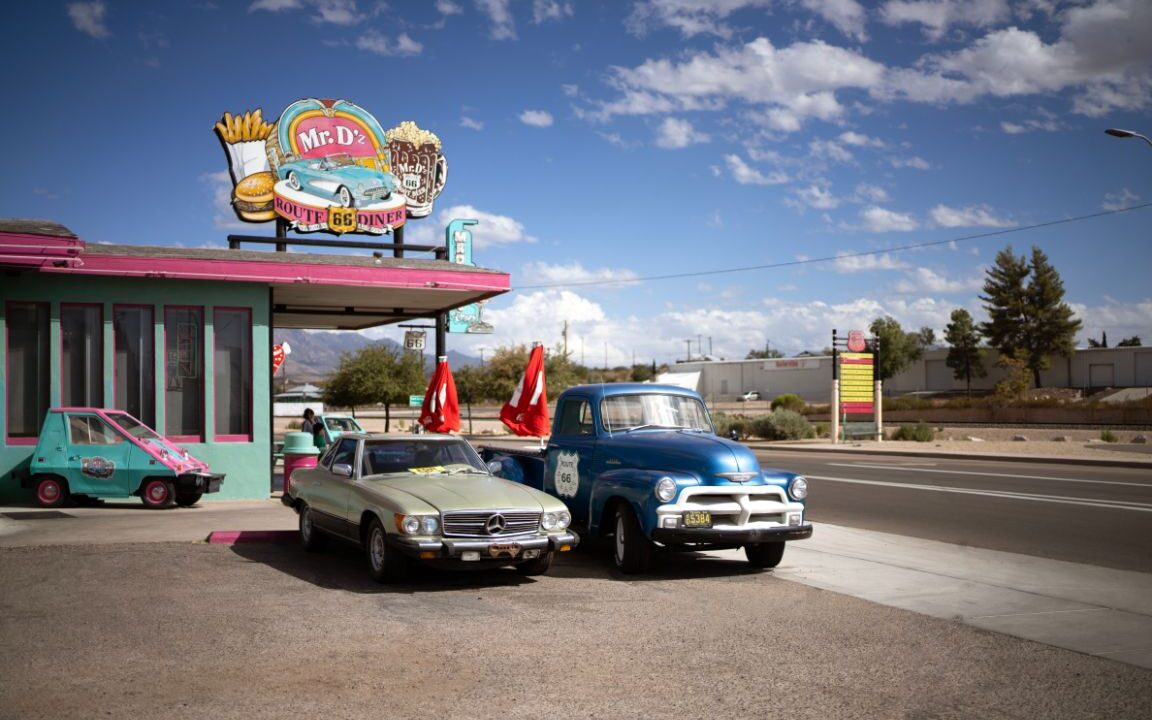
Before breakfast came through a drive-thru window, before coffee was ordered by size and flavor, and before everyone carried the world in their pocket, there was the diner.
It sat on a corner, beside a road, near a school, across from a gas station, or somewhere close enough that everybody knew where it was. The sign might have buzzed at night. The windows might have steamed up in winter. The coffee was usually hot, the booths were usually worn, and someone behind the counter always seemed to know who wanted their eggs over easy.
A diner was not just a place to eat.
It was a place to belong.
The Counter Everyone Remembered
If you grew up with a neighborhood diner, you probably remember the counter first.
The stools were lined up in a row, sometimes red, sometimes brown, sometimes cracked from years of use. There was a pie case somewhere close by. A coffee pot made its rounds again and again. Plates came out with toast leaning against eggs, burgers wrapped in paper, fries in small baskets, and pancakes bigger than they needed to be.
People did not rush the way they do now.
They sat.
They talked.
They read the newspaper.
They looked out the window.
Some came alone but were not really alone once they sat down. The waitress knew their order. The cook knew how they liked their bacon. Someone two stools down might start a conversation about the weather, the game, the price of gas, or the road construction outside town.
That was part of the diner’s magic. You could walk in as a customer and feel, at least for a little while, like a regular.
A Place Built for Ordinary People
The diner has humble roots. Early diners grew out of lunch wagons that served simple food to workers and late-night customers when many regular restaurants were closed. One commonly told origin story points to Walter Scott in Providence, Rhode Island, who sold food from a horse-drawn wagon in the late 1800s. Over time, these wagons evolved into the familiar diner cars, roadside restaurants, and stainless-steel buildings people remember today.
That history matters because diners were never meant to feel fancy.
They were built for people who needed a meal, a seat, and a place that would take them as they were. Factory workers, travelers, students, families after church, teenagers after a game, truck drivers, night-shift workers, and grandparents with grandkids all passed through the same doors.
The menu was usually large, but the feeling was simple.
Coffee. Eggs. Pie. Burgers. Meatloaf. Soup. Milkshakes. Toast. Pancakes. Something warm, something familiar, something that did not need explaining.
The Sound of a Diner
A diner had its own sound.
Forks hitting plates. Coffee cups placed back onto saucers. The bell from the kitchen window. A jukebox in the corner. The soft tear of a paper check. The door opening with a little ring. Someone calling out, “More coffee?”
Even silence felt different there.
A person could sit with a newspaper and not feel strange. A couple could share pie at the end of a long day. Kids could spin on the stools until someone told them to stop. Teenagers could stretch one order of fries into an hour of talking.
It was not only the food people remembered. It was the rhythm.
The diner made ordinary life feel steady.
Then vs. Now
| Then | Now |
|---|---|
| Coffee refills came without asking | Coffee is often taken to go |
| People read newspapers at the counter | People scroll phones while eating |
| Waitresses remembered regular orders | Apps remember order history |
| Families sat in booths after church or school games | Meals are often rushed between errands |
| A diner was part of the neighborhood | Many places feel like quick stops |
Not everything was better back then. But some things did feel more personal.
A diner gave people a small pause in the day. It gave a town a meeting place. It gave travelers a warm room off the road. It gave regular people a familiar table.
The Booth by the Window
Almost everyone had a favorite spot.
Maybe it was the booth by the window. Maybe it was the end of the counter. Maybe it was a corner table where your parents always sat. Maybe it was the place your grandparents took you for pancakes, or where your friends went after the football game, or where your family stopped during a long summer road trip.
The details stay with people.
The smell of grilled onions.
The little paper placemats.
The metal napkin holder.
The sugar packets in a glass container.
The ketchup bottle that was never quite full.
The dessert case you stared at even when you were already full.
These small things may not seem important until they disappear. Then suddenly they become memory.
Why Diners Still Matter
Even today, people are drawn to diners because they offer something modern life often loses: familiarity.
A diner does not ask you to be impressive. It does not need to be trendy. It does not require a reservation, a perfect outfit, or a special occasion. It welcomes sleepy mornings, late nights, quiet lunches, family breakfasts, and conversations that last longer than the meal.
That may be why the diner still carries such emotional weight. It reminds people of a slower kind of public life — one where strangers sat close enough to talk, where food was simple, and where a cup of coffee could keep you in one place for a little longer.
Some diners are gone now. Some changed names. Some became parking lots, banks, chain restaurants, or empty buildings with faded signs.
But for many people, the old diner is still there in memory.
The booth is still warm.
The coffee is still being poured.
The pie case is still waiting near the register.
And someone is still asking if you want your usual.
Sources & Further Reading
- The History of Diner Cars & Lunch Wagons — background on early lunch wagons and diner-car history.
- The Original Lunch Wagons — overview of how lunch wagons helped shape early diner culture.
- Fast Food Before Fast Food: The Original Food Trucks — background on Walter Scott and the late-night food-wagon roots of diners.
Do You Remember This?
Did your town have a diner everyone knew?
Maybe you remember the food, the jukebox, the waitress, the smell of breakfast, the booth your family always chose, or the late-night stop after a school event.
Do you remember this? Share your memory below.
Join the Conversation
What Do You Remember?
Did this story bring back a memory? Tell us below, or share a longer story on the Memory Wall.
Share a Full Memory