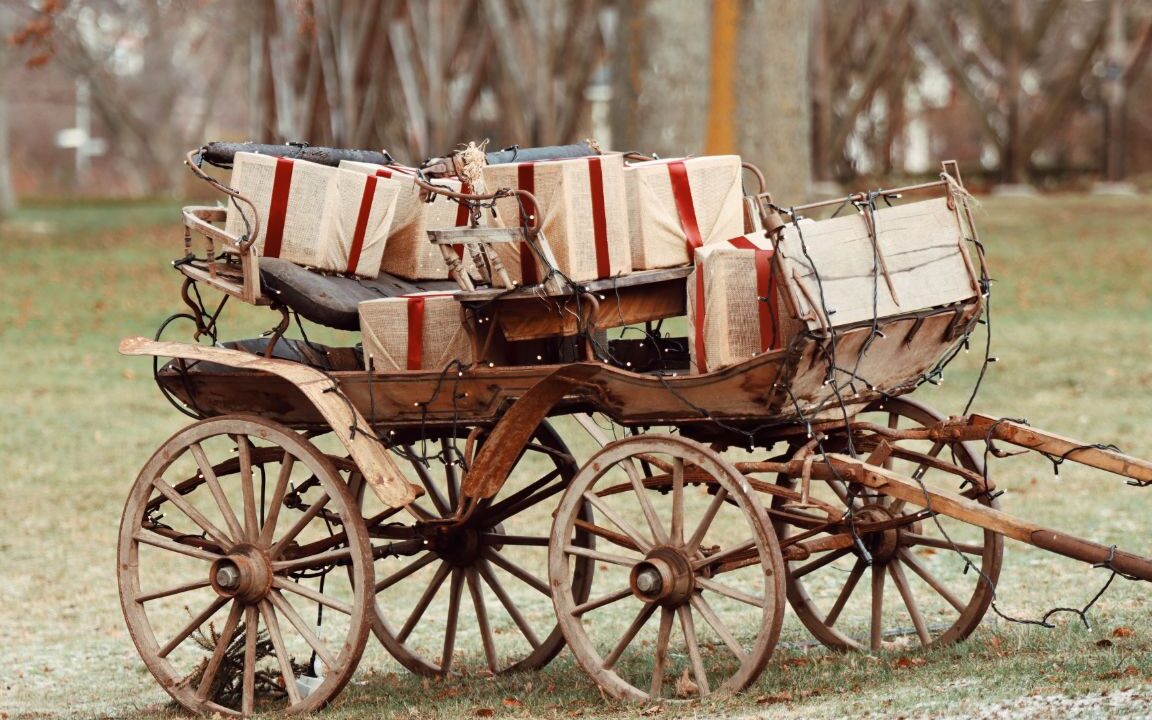
Before online wish lists, shopping carts, and packages that arrived at the door with a tracking number, there was the catalog.
It might have landed in the mailbox.
It might have been left on the coffee table.
It might have sat beside the couch, on top of the television, or near the kitchen phone where everyone could reach it.
And if it was the holiday catalog, kids knew exactly where to look first.
The toy pages.
For many families, the catalog was not just something to shop from.
It was something to dream through.
The Catalog Arrived Before the Holiday Did
A holiday catalog could make the season feel closer before anything else changed.
Before the decorations came out.
Before the tree went up.
Before school vacation started.
Before anyone wrapped a single gift.
The catalog arrived, and suddenly children had proof that the holidays were coming.
They turned the pages slowly at first, then faster when they reached the toys. Dolls, trains, board games, bicycles, action figures, art sets, puzzles, model cars, stuffed animals, and things that looked bigger and brighter on the page than they ever could in real life.
A child could sit with that catalog for an hour and not feel bored.
Every page had another possibility.
Circling Was Part of the Ritual
The catalog became interactive long before anyone used that word.
Kids circled what they wanted.
They folded corners.
They wrote initials beside certain items.
They underlined.
They starred.
They circled the same toy twice, just to make the point clear.
Some children were careful and realistic. Others circled almost everything, hoping the adults in the house would understand that the list was more of a dream than a request.
Parents knew how to read the markings.
A small circle meant interest.
A dark circle meant serious interest.
A page full of circles meant the child had lost all sense of budget, space, and reality.
But that was part of the fun.
The catalog gave children permission to imagine.
The Pages Felt Like a Store at Home
A catalog brought the store into the living room.
You did not need to go downtown, walk through a department store, or stand in a toy aisle. The pictures were already there, printed in neat rows, with descriptions, prices, sizes, colors, and item numbers.
For families far from big stores, catalogs could feel especially important.
They showed things a local shop might not carry. They made the wider world of goods feel reachable from a kitchen table or living room couch.
For children, though, the practical side did not matter much.
What mattered was the feeling.
A toy on the page felt almost close enough to own.
Everyone Had a Turn
In many homes, the catalog passed from person to person.
A child looked first.
Then a sibling grabbed it.
Then a parent took it to check prices.
Then it disappeared under a stack of mail.
Then someone found it again and returned to the same pages as before.
The catalog could start arguments.
“You already looked.”
“That is my page.”
“Do not bend it.”
“Do not mark everything.”
But it also created a shared family habit.
People talked about what they liked.
They compared choices.
They asked questions.
They hinted.
They hoped someone was listening.
The Toy Pages Were the Main Event
For kids, the toy section was the heart of the catalog.
Everything seemed possible there.
A train set could take over the floor.
A dollhouse could become a whole world.
A board game could promise the best family night ever.
A bicycle could mean freedom.
A toy kitchen, tool bench, race track, building set, or action figure could sit on the page and quietly become the thing a child thought about for weeks.
The toy pages made waiting part of the holiday.
The longer you looked, the more real the dream became.
Then vs. Now
| Then | Now |
|---|---|
| Kids circled toys in printed catalogs | Wish lists are often saved online or shared digitally |
| Families browsed the same pages together | Shopping often happens individually on separate screens |
| Catalogs made holiday anticipation last for weeks | Online shopping can make choosing and buying almost instant |
| Item numbers, prices, and page marks mattered | Links, carts, filters, and reviews guide many purchases |
| A catalog could become part of the season itself | Digital lists are useful, but less likely to become family keepsakes |
Not everything about catalog shopping was easier.
Orders could take time.
Items could sell out.
The toy on the page did not always match the toy in real life.
But the waiting made the dreaming last longer.
The Catalog Was a Kind of Memory Book
Years later, people may not remember every toy they asked for.
But they remember the catalog.
They remember the weight of it.
The thin pages.
The smell of paper and ink.
The sound of turning pages.
The way the toy section looked after every child in the house had marked it.
They remember lying on the floor, studying the pages.
They remember hoping someone noticed the item they circled most carefully.
They remember the feeling that a whole season could begin with a book in the mail.
Why These Catalogs Still Matter
Catalogs stay in memory because they slowed down wanting.
Today, it is easy to find something, click it, and move on.
The old catalog asked people to linger.
You looked.
You compared.
You imagined.
You came back the next day and looked again.
The catalog did not only show what could be bought. It gave families a shared object to gather around, talk about, mark up, and remember.
For kids, it made the wait for the holidays feel almost as exciting as the morning itself.
A catalog on the coffee table could hold a whole season of wishes.
Sources & Further Reading
- Trade Catalogs from Sears, Roebuck and Co. — Smithsonian Institution record for Sears trade catalogs, including material connected to Christmas catalogs and mail-order shopping.
- Let Your Fingers Do the Shopping — National Museum of American History background on mail-order catalogs and how they changed shopping from home.
- History of the Sears Catalog — Sears Archives background on the Sears catalog, Big Book, and specialty catalogs including the Christmas Wish Book.
Do You Remember This?
Did your family have a holiday catalog, wish book, or toy catalog everyone looked through?
Maybe you remember circling toys, folding pages, fighting over whose turn it was, or hoping someone noticed the one thing you wanted most.
Do you remember this? Share your memory below.


Join the Conversation
What Do You Remember?
Did this story bring back a memory? Tell us below, or share a longer story on the Memory Wall.
Share a Full Memory