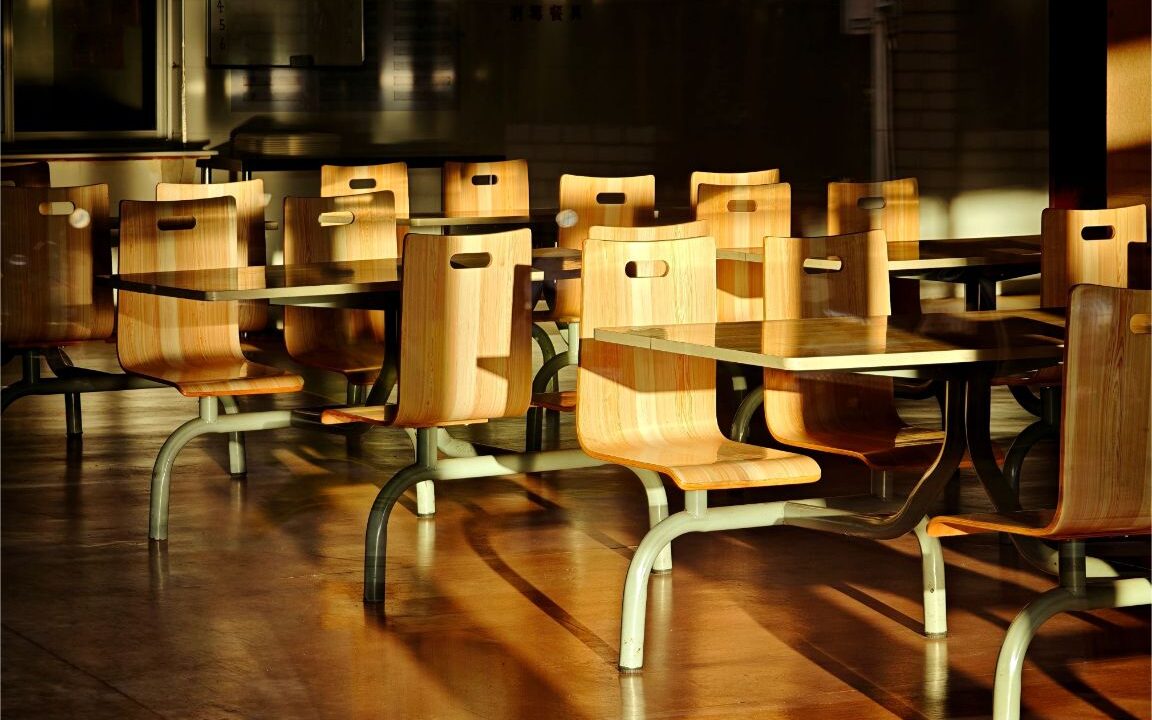
Long after people forget the homework, the spelling tests, and the names of most teachers, they often remember school lunch.
They remember the smell of the cafeteria before they even reached the door.
They remember standing in line with a tray.
They remember cartons of milk, metal utensils, paper napkins, and the sound of hundreds of kids talking at once.
They remember sitting with friends, trying to trade something they did not want for something better.
School lunch was not always exciting.
Sometimes it was the best part of the day.
Sometimes it was the part everyone complained about.
Either way, it became part of childhood.
The Cafeteria Had Its Own World
The cafeteria felt different from the rest of the school.
Classrooms were quiet when they had to be. Hallways had rules. Teachers watched everything.
But the lunchroom was louder.
It was where friends found each other. It was where kids laughed too hard, told stories, compared lunches, argued over seats, and tried to finish before the bell.
There were long tables.
Plastic trays.
Lunch ladies moving quickly behind the serving line.
A clock on the wall that always seemed to move too fast.
The cafeteria was not a place people usually thought of as special while they were in it.
But later, it became a memory full of details.
The Tray Everyone Remembers
For many people, the tray is the first thing that comes to mind.
It might have been divided into sections. It might have been plastic, foam, or metal depending on the school and the decade. There was usually a main dish, a side, something sweet or fruit-like, and milk.
The meal might have been familiar.
Pizza day.
Chicken nuggets.
Mashed potatoes.
Spaghetti.
Fish sticks.
Tater tots.
A sandwich wrapped in paper.
A square of dessert that everyone hoped would appear that day.
Sometimes the food was better than people remember. Sometimes it was exactly as strange as they remember.
But the tray itself made every meal feel like part of the same routine.
Lunch Was More Than Food
The lunchroom was where school life became social.
You learned who sat where.
You learned which table was loudest.
You learned who traded desserts, who brought lunch from home, and who could make a carton of milk spray across the table if no one was watching.
For some kids, lunch was freedom.
For others, it was complicated.
It could be the place where you found your friends, worried about fitting in, listened to rumors, made plans for after school, or sat quietly until the bell rang.
That is why school lunch memories stay with people. They are rarely only about the food.
They are about being young and surrounded by everyone else who was young too.
The Smell Before the Door Opened
Every school cafeteria had its own smell.
Sometimes it was bread.
Sometimes it was tomato sauce.
Sometimes it was disinfectant, warm vegetables, milk, and something sweet baking somewhere in the back.
You could often smell lunch before you saw it.
The smell drifted into the hallway just before the class changed. It told you what kind of day it might be.
A good lunch day could lift the mood of an entire grade.
A bad lunch day could cause complaints before anyone had even picked up a tray.
But even the meals people disliked became part of the story.
Years later, people still laugh about the things they would not eat, the things they traded away, and the lunchroom dishes they secretly liked more than they admitted.
A Routine Shared by Millions
School meal programs in the United States existed in different forms long before the modern National School Lunch Program. The federal program itself was established under the National School Lunch Act in 1946, but school food service had already developed over many decades through local programs, nutrition research, and community efforts.
That history matters, but it does not explain the full memory.
The real story is what happened at the table.
The friend who always saved you a seat.
The teacher who monitored the lunchroom.
The line that moved too slowly.
The dessert that disappeared before you got one.
The moment the bell rang and everyone pushed their trays forward at once.
Then vs. Now
| Then | Now |
|---|---|
| Lunch menus were often discussed all morning | Menus are often posted online before the day begins |
| Students waited in one long cafeteria line | Some schools use multiple serving stations or faster systems |
| A shared cafeteria was the main social break of the day | Students may have more options, devices, and different lunch routines |
| Milk cartons and paper napkins were familiar lunchroom details | Packaging and meal service vary more widely by school |
| Lunch memories were carried home through stories | Students can now share moments instantly through phones and messages |
Not every school lunch memory is warm.
Some were awkward. Some were rushed. Some meals were forgettable.
But the lunchroom was one of the few places where the whole school day paused at once.
The Meals That Became Legends
Every school had certain meals people remembered.
Maybe it was the rectangular pizza.
Maybe it was chili and cinnamon rolls.
Maybe it was a sloppy sandwich, a bowl of soup, a warm roll, or a dessert served only once in a while.
The exact meals changed from town to town, school to school, and decade to decade.
But the feeling was familiar.
You waited for the tray.
You looked at what everyone else got.
You decided what to eat first.
You traded something.
You hoped your friend had saved a seat.
And then the bell rang before anyone was ready.
Why School Lunches Stay With Us
School lunches stay in memory because they were ordinary.
They happened again and again, week after week, year after year.
They were part of growing up.
The tray, the line, the table, the noise, the friends, the food, and the rush back to class all became part of a rhythm that seemed normal at the time.
Only later do people realize how much of childhood was built from ordinary routines.
A school lunch was not a special event.
But it was a small shared moment in the middle of every day.
And somehow, people still remember it.
Sources & Further Reading
- History of the National School Lunch Program — USDA background on the long development of school food service in the United States.
- National School Lunch Program — USDA overview of the federally assisted program established under the National School Lunch Act of 1946.
- The National School Lunch Program: Program History — detailed USDA historical document on the origins and development of school meal programs.
Do You Remember This?
What do you remember about school lunch?
Maybe it was the tray, the milk carton, the smell of the cafeteria, the food everyone traded, the table where your friends sat, or the meal your school was known for.
Do you remember this? Share your memory below.


Join the Conversation
What Do You Remember?
Did this story bring back a memory? Tell us below, or share a longer story on the Memory Wall.
Share a Full Memory