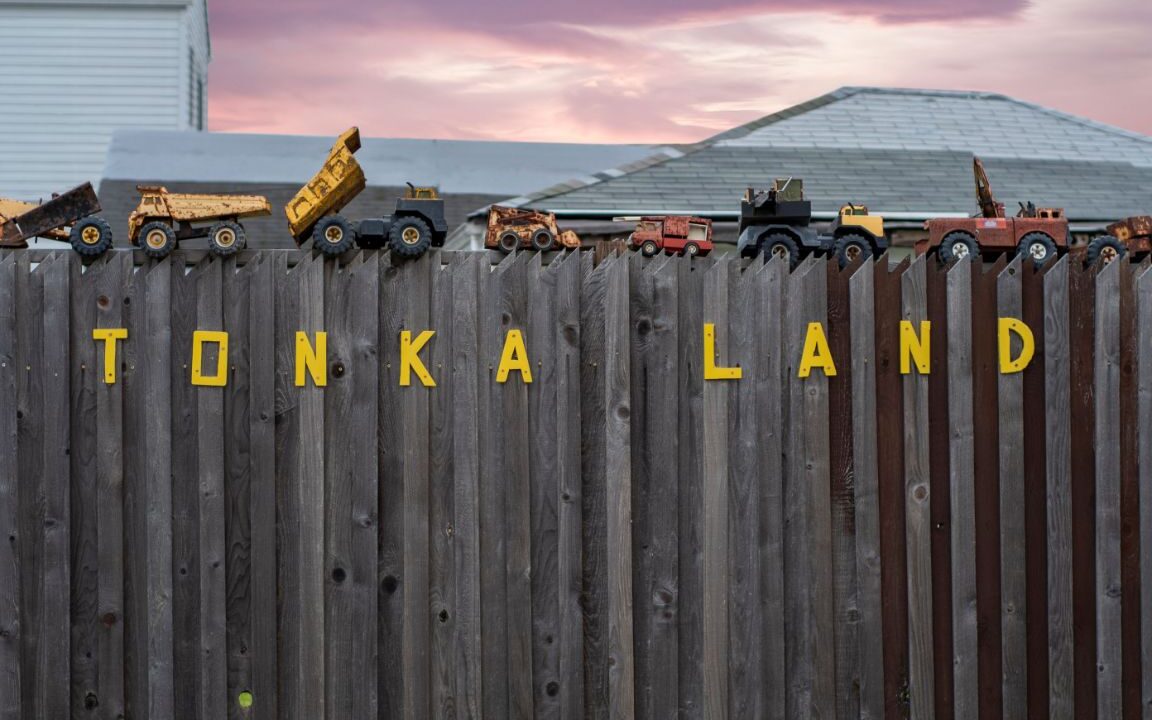
Some toys were meant to stay clean.
Tonka trucks were not.
They were pushed through dirt, loaded with rocks, left outside after rain, driven across driveways, and sent down hills with more confidence than control.
The paint became scratched.
The metal collected dents.
The wheels carried mud back into the house.
A truck might lose a hubcap, bend an axle, or develop a squeak that never went away. It still returned to work the next day.
For generations of children, a Tonka truck was not a miniature object to admire on a shelf. It was construction equipment for a world built close to the ground.
A sandbox became a quarry.
A garden became a road project.
A pile of soil became a mountain that had to be moved before dinner.
What Made Vintage Tonka Trucks Different?
Classic Tonka trucks were known for several simple qualities:
- Stamped-steel bodies
- Rugged wheels and tires
- Working dump beds
- Moving buckets and blades
- Construction-inspired designs
- Bright yellow paint on many models
- Few delicate parts
- Enough size and weight for outdoor play
The trucks did not require batteries.
They did not make electronic sounds.
They did not provide instructions for the story.
Children supplied the engine noises, the construction plan, the drivers, the accidents, and the reason an entire pile of dirt had to move from one side of the yard to the other.
That simplicity made the trucks useful in many kinds of play.
Tonka Began Near Lake Minnetonka
The company behind Tonka began in Minnesota during the late 1940s.
Its original business was not intended to become a major toy brand. The company produced metal goods, but a toy steam shovel developed by an earlier manufacturer helped lead it toward toy vehicles.
The Tonka name came from nearby Lake Minnetonka.
Early construction toys included a steam shovel and crane. As the line expanded, children gained access to miniature versions of the machinery they saw on roads, farms, construction sites, and around growing neighborhoods.
The company eventually became best known for trucks that looked ready for real work.
The Yellow Dump Truck Became the Symbol
Tonka produced many kinds of vehicles, but the yellow dump truck became the brand’s most recognizable toy.
Its design was easy to understand.
The child loaded the bed.
The truck carried the material.
The bed tilted upward.
The load fell out.
Then the process began again.
A child might spend an afternoon moving the same pile of sand a few feet at a time.
The repetition was part of the appeal.
The truck gave the activity a purpose. Dirt was no longer simply dirt. It was material needed for a road, dam, building site, or imaginary town.
The working bed also gave children a satisfying mechanical action without making the toy complicated.
Lift.
Dump.
Lower.
Reload.
Steel Made the Trucks Feel Serious
The metal body gave older Tonka trucks a different presence from lighter toys.
They had weight.
They made noise when they rolled across concrete.
The dump bed clanged when it dropped.
The body felt cool when first taken outside and warm after sitting in the sun.
Steel also allowed the trucks to survive kinds of play that would have damaged more delicate toys.
Children leaned on them.
They overloaded them.
They pushed them into fences.
They left them at the bottom of sandboxes.
Some even tried to sit on the larger models, whether the toy was designed for that or not.
The trucks did not remain perfect.
They remained usable.
Every Yard Became a Construction Site
Tonka trucks worked best when children had something to move.
Sand was ideal.
It could be loaded, packed, shaped, dumped, and moved again.
Dirt worked too, although parents were less pleased when it entered the house.
Small stones became gravel.
Sticks became logs.
Leaves became cargo.
Snow could be pushed into piles by a bulldozer or front-end loader.
Children created roads through flower beds, trenches beside sidewalks, and construction zones beneath porches.
A single dump truck was enough to begin, but several vehicles made the operation feel complete.
The loader filled the truck.
The truck carried the load.
The bulldozer cleared the road.
The crane lifted something that probably did not need lifting.
The Sandbox Was Their Natural Home
A sandbox could keep a Tonka fleet busy for hours.
The sides formed the boundaries of a small world. Roads were carved through the sand. Hills rose and collapsed. Tunnels were attempted, even when they rarely stayed open.
The vehicles worked together.
One child controlled the dump truck.
Another used the loader.
Someone else decided where the road should go.
Arguments developed over territory, equipment, and whether someone had ruined the construction project.
Those disagreements were also part of playing together.
The trucks gave children objects to share, jobs to divide, and problems to solve without an adult planning the activity.
Tonka Made More Than Dump Trucks
Vintage Tonka collections included many kinds of vehicles and machinery.
Popular examples included:
- Bulldozers
- Front-end loaders
- Cranes
- Steam shovels
- Fire trucks
- Tow trucks
- Pickup trucks
- Cement mixers
- Road graders
- Garbage trucks
- Farm vehicles
- Jeep-style vehicles
- Delivery trucks
- Car carriers
- Rescue vehicles
Some models had moving ladders, hooks, buckets, blades, mixers, or trailers.
Others were simpler vehicles built mainly for pushing and carrying.
Children did not always use them for their intended job. A fire truck could become a tow truck. A dump truck could transport action figures. A crane could lift blocks, socks, toy cars, or anything else attached to its hook.
The Mighty Dump Truck Raised the Scale
The large Mighty Dump Truck became especially memorable.
It looked substantial beside smaller toy vehicles and could carry a serious load of sand, stones, or other backyard material.
Its size made children feel as if they were operating real equipment rather than merely holding a small model.
The large bed invited overloading.
Children filled it until material spilled over the sides, then pushed with both hands when the truck became too heavy to move easily.
A large Tonka truck also attracted younger siblings, who sometimes tried to ride inside the bed or use the vehicle as support while walking.
The toy often became shared family property, even when it had originally belonged to one child.
The Scratches Became Part of the Truck
A new Tonka truck arrived with bright paint and clean metal.
It rarely stayed that way.
The first scratch might seem disappointing. After enough play, the damage became part of the truck’s identity.
Paint wore away from corners.
The dump bed showed marks from rocks.
Rust appeared where metal remained wet.
Decals faded or peeled.
Wheels became stained.
These changes told the story of how the toy had been used.
A collector may value an untouched example in its original box. A family may value the dented truck that survived three children, two houses, and years beneath a backyard shed.
Condition and meaning are not always the same thing.
Tonka Trucks Were Often Passed Down
Durability gave the trucks a longer life than many toys.
An older sibling outgrew one.
A younger sibling claimed it.
A cousin inherited it.
A grandparent stored it in a garage until another child was old enough to play.
The truck might remain in a family long after the original box and instructions disappeared.
By the time it reached the next generation, it already had a history.
Nobody knew where every dent came from.
The wheels no longer rolled perfectly.
The paint was no longer bright.
But the basic action still worked.
Load it.
Push it.
Dump it.
They Encouraged Physical Play
Tonka trucks asked children to move.
A child crawled behind the vehicle.
Pushed it across the yard.
Dug material with a small shovel.
Lifted the bed.
Ran to the other side of the sandbox.
Built the hill again after it collapsed.
The play involved hands, arms, knees, dirt, balance, and effort.
It also involved planning.
Where should the road go?
How could the truck reach the top?
What happened if the load was too heavy?
How many trips would it take to move the pile?
The child did not think of this as learning.
It was simply work that mattered inside the game.
The Trucks Reflected the World Children Saw
Construction vehicles were highly visible during the decades when Tonka grew.
New roads, housing developments, schools, shopping centers, and suburban neighborhoods brought full-size equipment into everyday view.
Children watched bulldozers clear land.
They saw dump trucks carrying dirt.
They passed road graders and loaders from the back seat of the family car.
Tonka turned those machines into something children could control.
The toys gave them a way to repeat what they had observed, but on a scale that fit beneath a kitchen table or inside a sandbox.
Advertising Promised Toughness
Tonka’s identity became closely tied to strength.
The trucks were promoted as rugged toys built to withstand demanding play. That image matched what children wanted to believe about them.
A Tonka truck was not supposed to be fragile.
It was supposed to handle the job.
The idea of toughness also reassured parents. A durable toy offered the possibility of lasting beyond one birthday or holiday season.
The promise became part of the brand’s memory.
Even people who cannot name a specific model often remember the broader idea:
Tonka trucks were built for hard play.
They Were Not Completely Indestructible
No toy could survive everything children attempted.
Axles bent.
Plastic wheels cracked.
Moving parts loosened.
Metal rusted when left outside.
A dump bed could be forced too far.
A truck might survive years of ordinary play and then lose a battle with a bicycle, a driveway, or an older child testing its limits.
Calling them durable did not make them magical.
It meant they tolerated more than many other toys.
When damage happened, families sometimes repaired the truck rather than replacing it.
A wheel was reattached.
A bent piece was straightened.
Rust was ignored.
The toy returned to the yard.
Then vs. Now
| Then | Now |
|---|---|
| Many Tonka trucks used substantial stamped-steel bodies | Modern versions may combine steel and durable plastics |
| Toys were often pushed through dirt, sand, gravel, and snow | Construction play also happens indoors with cleaner play materials |
| Children supplied engine sounds and stories | Some modern toys add electronic sounds, lights, or interactive features |
| A truck might be shared by several siblings over many years | Toys are easier to replace, though durable models can still be passed down |
| Scratches, dents, and faded paint showed years of use | Collectors may preserve toys unopened or in restored condition |
| Construction scenes were created without screens or instructions | Children can also watch demonstrations and construction videos online |
| Repairs were often improvised at home | Replacement may be easier than repair for some modern toys |
Why Adults Collect Vintage Tonka Trucks
The same qualities that made Tonka trucks good childhood toys now make older examples appealing to collectors.
Collectors look for:
- Early models
- Unusual vehicles
- Original paint
- Complete moving parts
- Original decals
- Working wheels
- Boxes and paperwork
- Models tied to particular decades
- Trucks remembered from childhood
Some collectors restore damaged trucks until they look almost new.
Others prefer scratches, faded paint, and signs of real use.
A restored truck shows how it may have looked on a store shelf.
A worn truck shows what happened after a child opened the box.
Both approaches preserve a different part of the history.
What to Check Before Buying a Vintage Tonka Truck
Anyone buying an older truck should look beyond the paint.
Important details include:
- Whether the wheels turn properly
- Whether the axles are straight
- Whether the dump bed or moving parts work
- Whether rust is superficial or severe
- Whether sharp edges have developed
- Whether major parts are missing
- Whether the decals are original or replacements
- Whether the toy has been repainted
- Whether the size and age are suitable for its intended use
A collector display piece and a truck intended for a child require different standards.
Older toys may not meet modern safety expectations. Rust, sharp metal, small detachable parts, old coatings, and worn mechanisms should be considered before allowing active play.
Why Vintage Tonka Trucks Still Matter
Tonka trucks are remembered because they gave children tools rather than complete stories.
The toy did not explain what the construction project was.
It did not tell the child which load to carry.
It did not decide whether the sandbox needed a road, a quarry, a dam, or a city.
The truck provided a working machine.
Imagination created the job.
That balance made the toy useful for years.
The same dump truck could belong to a construction worker one day, a farmer the next, and an explorer carrying supplies by the weekend.
It could work alone or become part of a whole fleet.
It could stay indoors on a rainy day or disappear into the yard for an entire summer.
Why People Remember Their Tonka Truck
Adults may forget many toys they once owned.
A Tonka truck can be harder to forget because it became part of a physical place.
The sandbox behind the house.
The dirt pile near the garden.
The driveway where the wheels made a familiar sound.
The garage where the truck was stored.
The porch where someone left it after being called inside.
People remember its weight.
The feel of the metal.
The scrape of the dump bed.
The faded yellow paint.
The way stones sounded when they landed inside.
The truck did not simply represent childhood.
It carried pieces of childhood inside it.
Dirt.
Sand.
Scratches.
Rain.
Years of work that only mattered because a child believed it did.
Quick Answers About Vintage Tonka Trucks
When were Tonka trucks first made?
The company that became Tonka began producing toy construction vehicles in Minnesota during the late 1940s. Its early toys included metal cranes and steam shovels.
Why were old Tonka trucks so durable?
Many classic models used stamped-steel bodies, simple mechanical parts, and rugged wheels. Their uncomplicated construction allowed them to withstand demanding indoor and outdoor play.
What was the most famous Tonka truck?
The yellow dump truck, particularly the large Mighty Dump Truck, became the brand’s most recognizable vehicle.
Were all vintage Tonka trucks yellow?
No. Although yellow construction vehicles became strongly associated with the brand, Tonka also produced red fire trucks, pickups, Jeeps, car carriers, delivery vehicles, and models in many other colors.
Are vintage Tonka trucks valuable?
Some are collectible, especially early, rare, complete, boxed, or well-preserved models. Value depends on age, model, originality, condition, demand, and whether important parts remain.
Are old metal Tonka trucks safe for children?
They should be inspected carefully before play. Rust, sharp edges, damaged wheels, small parts, worn coatings, and older construction standards can make a vintage example better suited for display than active use.
Sources & Further Reading
- Tonka Trucks — Official brand background on Tonka’s origins, construction vehicles, and long association with durable toy trucks.
- Tonka Volkswagen Beetle Toy Car — National Museum of American History collection record for a Tonka vehicle manufactured during the late 1960s.
- Tonka Volkswagen Beetle — Smithsonian object record preserving an example of the company’s expansion beyond construction trucks.
- Designed to Sell — Smithsonian material on product design and consumer culture featuring a Tonka toy vehicle from the 1960s.
- Tonka at Basic Fun — Current brand information showing the continuing use of stamped steel and working construction features in selected Tonka trucks.
Do You Remember This?
Did you have a Tonka truck in the sandbox, driveway, or backyard?
Maybe you remember loading the dump bed with dirt, pushing a bulldozer through snow, leaving a truck outside in the rain, or inheriting one already covered in dents and scratches.
What job did your Tonka truck perform most often?
Do you remember this? Share your memory below.


Join the Conversation
What Do You Remember?
Did this story bring back a memory? Tell us below, or share a longer story on the Memory Wall.
Share a Full Memory