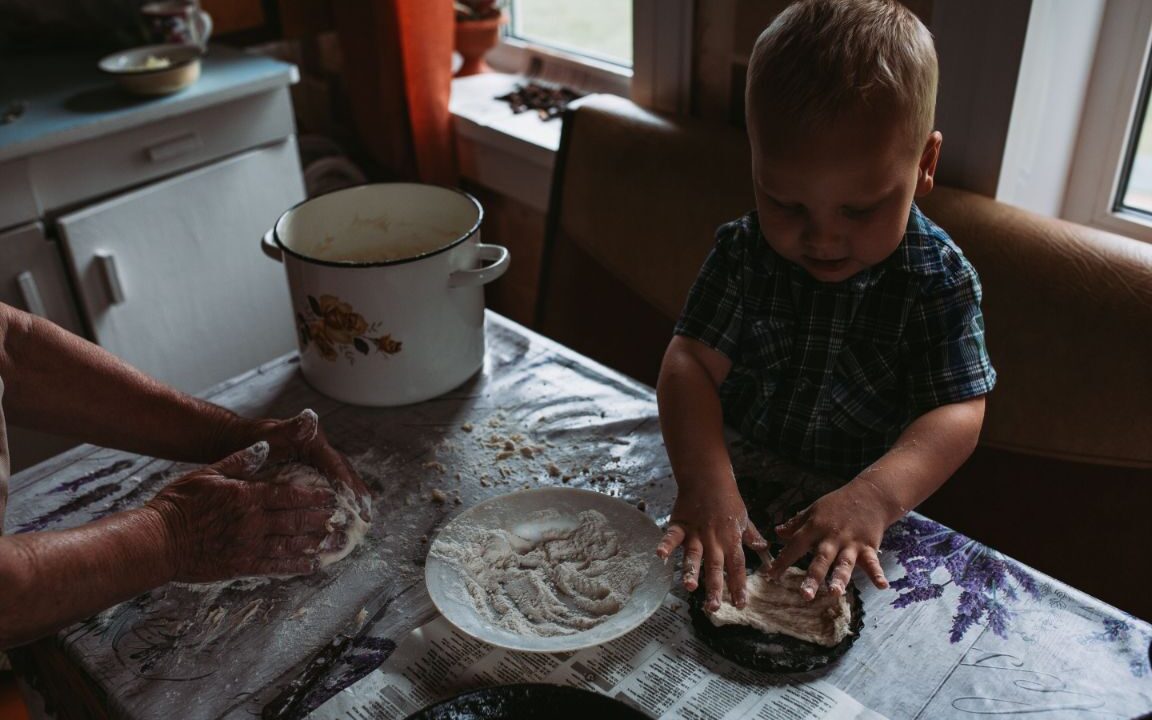
Before kitchens became perfect backgrounds for photos, they were often simply where life happened.
The kitchen was where coffee started the day.
It was where school lunches were packed, vegetables were chopped, cookies cooled, bills were sorted, and family members passed through at different hours.
It was where someone stood at the stove while someone else sat at the table.
It was where the radio played in the background.
It was where the smell of dinner told everyone what kind of evening it might be.
For many people, the kitchen was not just a room.
It was the heart of home.
The Table Was Where Everything Gathered
A family kitchen table could be many things in one day.
Breakfast table.
Homework desk.
Recipe station.
Place to fold laundry.
Place to write a note.
Place to sit with someone when they had something important to say.
The table did not always match. The chairs may have been scratched. There may have been a plastic tablecloth, a bowl of fruit, a salt shaker, a stack of mail, or a cookbook that never quite made it back to the shelf.
But it was familiar.
Everyone knew where they usually sat.
Everyone knew which chair wobbled.
Everyone knew where the cookie jar was kept.
The kitchen table was where ordinary life collected.
The Smell Told You What Was Happening
People often remember a kitchen through smell before anything else.
Coffee in the morning.
Toast.
Bacon.
Soup simmering.
Onions in a pan.
A cake in the oven.
Bread cooling on the counter.
The smell could travel through the whole house.
It reached bedrooms, hallways, living rooms, and front doors. It told kids coming home from school that dinner had started. It told someone waking up early that another day was beginning.
Some smells stayed connected to certain people.
A grandmother’s cinnamon rolls.
A father’s Sunday breakfast.
A mother’s soup when someone was sick.
A holiday pie that only appeared once a year.
The recipe may have been simple.
The memory was not.
Recipe Cards Had Their Own History
Many family recipes did not begin in a cookbook.
They lived on small cards, loose paper, notebook pages, church pamphlets, and handwritten notes tucked into drawers.
The cards might have stains on them.
A little flour in the corner.
A faded mark from years of being held near the stove.
A note that said “double for company” or “add more cinnamon.”
Sometimes the handwriting belonged to someone who was no longer there.
That made the recipe feel like more than instructions.
It became a way of remembering.
A family might make the same dish every holiday without talking much about where it came from. But the card stayed. The handwriting stayed. The small changes made over the years stayed too.
The kitchen held those things quietly.
The Counter Was Always Busy
Kitchen counters carried more than food.
There were grocery lists.
Lunchboxes.
Receipts.
School papers.
A phone with a long cord.
A dish towel over someone’s shoulder.
A mixing bowl waiting to be washed.
A pot cooling before it went into the refrigerator.
The counter was never really empty for long.
Someone was always putting something down or picking something up.
That was part of its warmth.
A kitchen did not have to look perfect to feel alive.
In fact, it often felt more like home because it was a little messy.
Then vs. Now
| Then | Now |
|---|---|
| Kitchens often centered around daily family routines | Kitchens are often designed around speed, appliances, and individual schedules |
| Recipes lived on cards, notebooks, and memory | Recipes are often saved through apps, videos, and online searches |
| Family members gathered around one table more often | Meals can happen at different times and in different rooms |
| The kitchen radio or family conversation filled the room | Phones and personal screens often fill quieter moments |
| A meal could take time to prepare and share | Meals are often planned around busy schedules or quick options |
Not everything about the past was easier.
Cooking took work.
Cleaning took work.
Meals did not always go smoothly.
Families still rushed, argued, worried, and had too much to do.
But the kitchen gave people a place to return to.
The Small Things That Stayed
People remember the sound of a spoon against a bowl.
They remember the refrigerator hum.
They remember the cabinet that stuck.
They remember the drawer full of mismatched utensils.
They remember waiting for cookies to cool.
They remember being told not to touch something until dinner.
They remember sitting at the table while someone cooked.
They remember helping, even if “helping” mostly meant making a mess.
The details were ordinary.
That is why they lasted.
Why Family Kitchens Still Matter
A family kitchen was often the one place where everyone crossed paths.
Before school.
After work.
Before bed.
During holidays.
On quiet weekends.
It was where news was shared, plans were made, and problems were talked through. It was where children learned family recipes, watched adults cook, and slowly became part of the routines that held a home together.
The kitchen did not have to be large.
It only had to be familiar.
A table.
A stove.
A few chairs.
A room full of small sounds and smells.
And somehow, that was enough to make it the center of everything.
Sources & Further Reading
- How to Collect Family Recipes — Library of Congress guidance and inspiration from historic cookbook collections and family recipe traditions.
- Everything Including the Kitchen Sink — Library of Congress photographs showing everyday kitchen life, baking, and canning in a 1957 farm home.
- FOOD: Transforming the American Table — Smithsonian exhibition on changing food, cooking, and kitchen life in postwar America.
Do You Remember This?
What do you remember most about your family kitchen?
Maybe it was the smell of dinner, a recipe card, a kitchen table, the radio playing, a cookie jar, or the person who always seemed to be cooking.
Do you remember this? Share your memory below.



Join the Conversation
What Do You Remember?
Did this story bring back a memory? Tell us below, or share a longer story on the Memory Wall.
Share a Full Memory