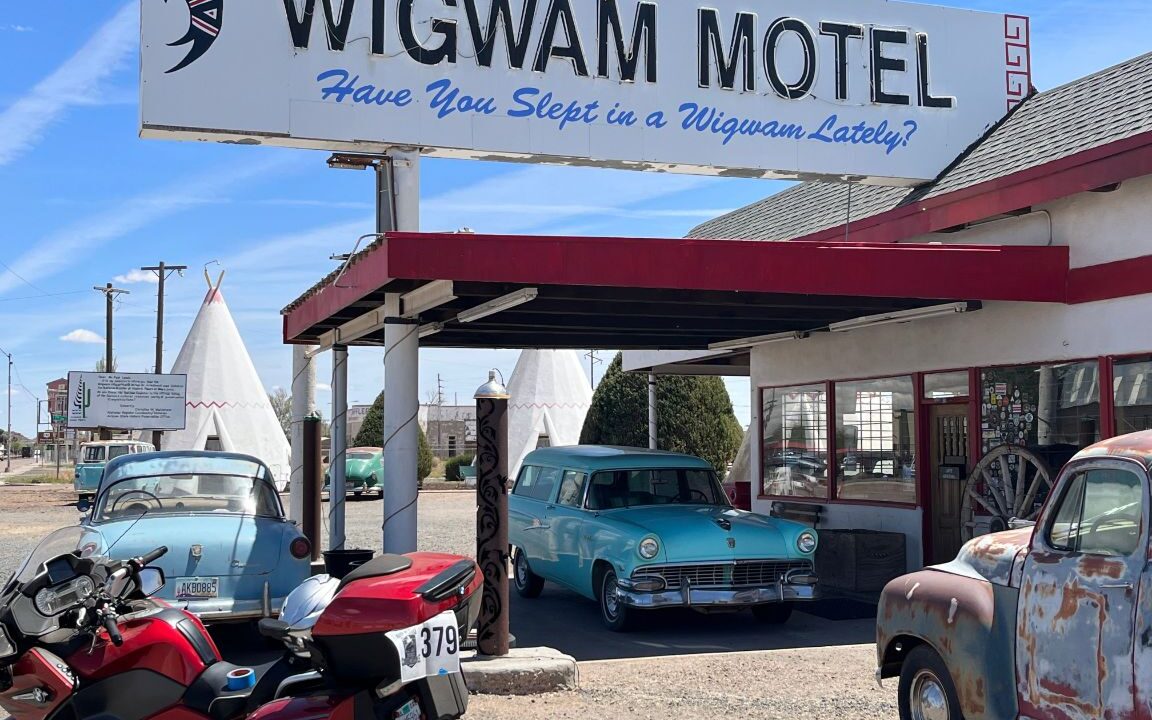
Before hotel apps, review scores, and photos of every room on a phone screen, finding a place to sleep on a road trip was often part of the adventure.
A family drove until someone got tired.
The sky started getting dark.
The kids in the back seat asked when they were stopping.
Then, somewhere along the highway, a sign appeared.
VACANCY.
Maybe the letters glowed in red or blue neon. Maybe there was a pool shaped like a kidney bean. Maybe the motel had a row of doors facing the parking lot, with cars parked right outside each room.
That was often enough.
The family pulled in.
The trip paused.
And for one night, a small roadside motel became part of the story.
The Sign Told You Everything
Before online booking, travelers did not always know where they would sleep.
Some families planned ahead. Others simply drove until they felt ready to stop. The motel sign became an answer to a question everyone in the car had been asking for miles.
Was there a room?
Was there a pool?
Did the place look clean?
Was there a diner nearby?
Could everyone fit?
A glowing sign could feel reassuring after a long drive.
VACANCY meant the family could finally stretch their legs. It meant bags would come out of the trunk. It meant someone would get the room key, someone would argue over which bed to take, and someone would probably ask if they could swim before dinner.
The motel was not always the destination.
But it became part of the vacation anyway.
Parking Right Outside the Door
One of the things people remember most is how close the car was.
You could pull right up to the room.
There was no long hallway, no elevator, no parking garage, and no need to carry bags through a large lobby. The car sat outside the door, often only a few steps from the bed.
For kids, that made the place feel different from home.
The family car was still there.
The road was still close.
Everything smelled a little like travel: warm pavement, suitcases, fast food, chlorine, sunscreen, and the air conditioner running too loudly in the room.
A motel room was simple.
Two beds.
A small table.
A television on a dresser.
A bathroom with tiny soaps.
Maybe a postcard rack near the office.
Maybe an ice machine outside.
Maybe a plastic chair by the door where someone sat while waiting for the rest of the family.
Nothing about it was fancy.
That was part of the charm.
The Motel Pool Was a Big Deal
For many kids, the pool mattered more than the room.
A motel could look ordinary from the road, but if it had a pool, it suddenly felt special.
Kids changed clothes as quickly as possible. Parents said they had to wait until after dinner, then sometimes changed their minds. Towels were carried outside. Someone always said not to run. Someone always ran anyway.
The pool had its own sound.
Splashes.
Voices echoing off the walls.
A radio playing somewhere nearby.
The hum of traffic beyond the parking lot.
Children who had been bored in the car all day suddenly had enough energy for another two hours.
Even a small pool could make a motel unforgettable.
Years later, people may not remember the name of the town or the route they took. But they remember the pool lights coming on at night.
The Room Was Never Quite Like Home
A motel room felt temporary in a way kids noticed immediately.
The furniture was unfamiliar.
The blankets had a different texture.
The television had fewer channels than home.
The bathroom light was too bright.
The ice bucket looked important even if nobody used it.
There was often a strange excitement in sleeping somewhere that was not your own bed.
Brothers and sisters might share one bed. Parents might let the kids stay up a little later. Everyone talked quietly about where they had been that day and where they would go next.
The room became a small checkpoint between two stretches of road.
You arrived tired.
You slept.
You woke up.
Then you packed the car again and kept going.
The Morning After
Morning at a roadside motel had its own feeling too.
The curtains opened.
The car was still outside.
Someone carried a bag back to the trunk.
Someone went to the ice machine one last time.
Someone asked where breakfast would be.
The family might stop at a diner, get coffee from the office, or eat something quick before heading back onto the highway.
Then the room was empty again.
The beds were unmade.
The key was returned.
The door closed behind you.
And the motel disappeared into the long list of places the family had passed through.
But it often stayed in memory.
Then vs. Now
| Then | Now |
|---|---|
| Families often stopped when they saw a promising vacancy sign | Hotels are often booked through apps before the trip begins |
| Travelers judged a place by its sign, parking lot, office, and first impression | Travelers compare reviews, photos, ratings, and maps online |
| Motel pools and neon signs could make a stop feel exciting | Amenities are often compared before arrival |
| A room was chosen because it was available at the right moment | Rooms are selected through filters, prices, and online preferences |
| The stop itself became part of the adventure | Lodging is often treated mainly as a planned overnight detail |
Not everything about old road travel was easier.
Some motels were worn down. Some rooms were noisy. Some places looked better from the road than they did inside.
But the uncertainty made the stop feel more memorable.
Motels Were Built for the Road
As automobile travel became more common, motor courts and motels grew along highways to serve people who wanted an easy place to stop for the night. By 1948, an estimated 30,000 motor courts or motels were operating along U.S. highways. Many were designed around the needs of motorists: rooms close to the car, simple access from the road, and signs made to catch the attention of passing travelers.
Some became famous landmarks along routes such as Route 66. Others were small family-run places that existed for decades, then disappeared when highways changed, chains grew, or travelers began booking rooms differently.
But for many families, the old motel was never just a business.
It was the place where the day’s drive ended.
The Road Was Not Equal for Everyone
It is also important to remember that road travel was not equally easy or safe for every family.
During segregation, Black travelers often faced discrimination when trying to find food, fuel, and lodging. The Green Book helped identify businesses and places where Black motorists could expect safer treatment.
That history belongs in the story of American road travel too.
The open road could represent freedom, but it could also require careful planning, courage, and knowledge of which places would welcome you.
Why Roadside Motels Still Stay With Us
People remember roadside motels because they were full of small details.
The neon sign.
The room key on a large plastic tag.
The pool.
The ice machine.
The smell of the parking lot after rain.
The family car outside the door.
The feeling of being tired but excited because tomorrow meant another stretch of road.
A motel room might have lasted only one night.
But the memory could last for decades.
Sources & Further Reading
- Postwar Years: 1945–1960 — National Park Service background on postwar travel culture and the estimated growth of motor courts and motels along U.S. highways.
- De Anza Motor Lodge — National Park Service history of a Route 66 motor lodge that expanded after World War II to serve increasing automobile traffic.
- John Margolies Roadside America Photograph Archive — Library of Congress collection documenting roadside commercial architecture, including motels, restaurants, theaters, and highway landmarks.
- Green Book Properties Listed in the National Register of Historic Places — National Park Service background on the Green Book and the travel realities faced by Black motorists during segregation.
Do You Remember This?
Did your family have a favorite roadside motel, motor lodge, or place you stopped during long drives?
Maybe you remember the vacancy sign, the motel pool, the room key, the television, the parking lot, or the excitement of waking up somewhere new.
Do you remember this? Share your memory below.
Join the Conversation
What Do You Remember?
Did this story bring back a memory? Tell us below, or share a longer story on the Memory Wall.
Share a Full Memory