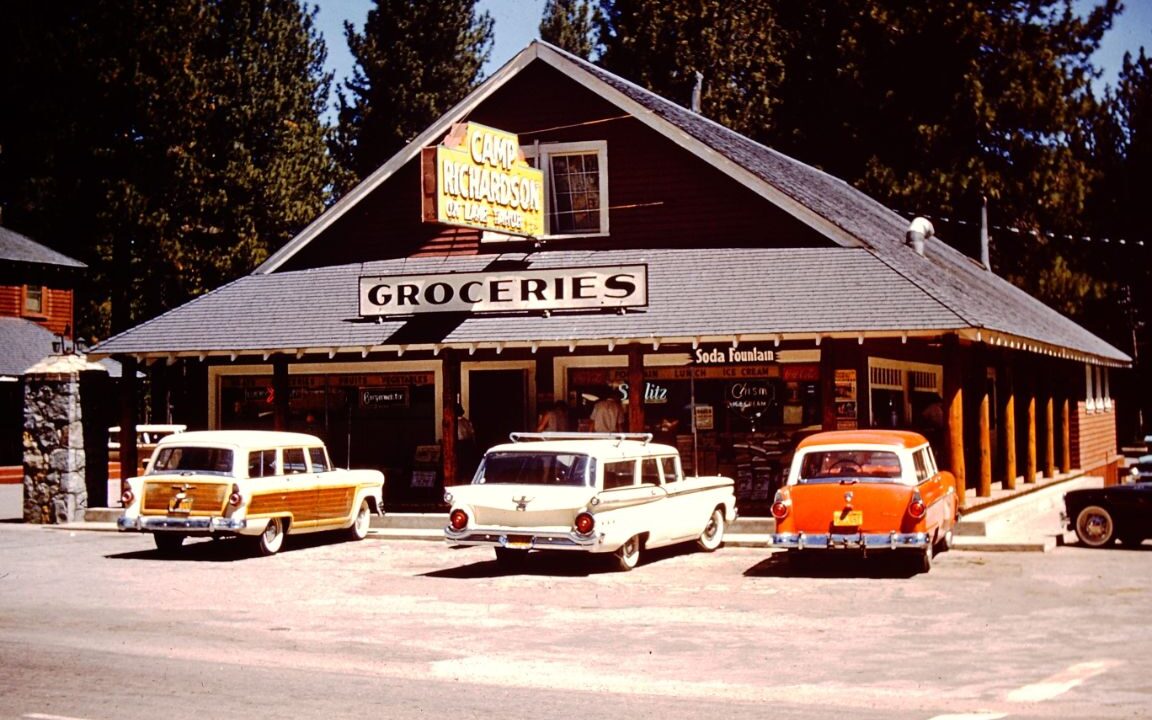
Before every errand meant getting in the car and driving across town, there was often a little store nearby.
It might have stood on the corner of two quiet streets. It might have had a faded sign, a bell on the door, and windows crowded with posters, newspapers, and handwritten notices.
Inside were shelves of simple things people needed every day.
Milk.
Bread.
Eggs.
Candy.
Newspapers.
Soap.
A few canned goods.
Maybe a rack of comic books near the counter.
Maybe a small freezer humming in the back.
It was not a big place. It did not need to be.
For many families, the corner store was part of the neighborhood itself.
The Store Was Always Nearby
A corner store was useful because it was close.
Someone could walk there after school. A parent could send a child to pick up milk. A neighbor could stop in for bread, cigarettes, stamps, or a newspaper. A grandparent might walk over in the morning just to see who was around.
The trip was usually short.
That was part of the memory.
You knew the sidewalk. You knew which house had the loud dog. You knew where the street cracked near the curb. You knew when you were almost there because the sign came into view.
For kids, the store could feel like a little bit of freedom.
A few coins in a pocket.
A list folded in half.
A promise not to buy too much candy.
The walk itself made the small errand feel important.
Everyone Knew the Owner
In many neighborhoods, the person behind the counter knew the people who came in.
They knew which family lived down the block.
They knew who bought the same newspaper every morning.
They knew which kids came in after school.
They knew who needed to put something on a tab until payday.
That did not mean every store was perfect. But it meant the place often felt personal.
A customer was not only a transaction.
They were somebody’s neighbor.
Some store owners asked about your parents. Some remembered what you usually bought. Some gave children a stern look when they reached too quickly for candy. Others slipped an extra piece into a bag when nobody was paying attention.
Small things like that stayed with people.
The Counter Was the Center of the Store
The counter was where everything happened.
You set down your coins.
You asked for what you wanted.
You waited while someone reached behind them for gum, cigarettes, lottery tickets, a newspaper, or a small item kept out of reach.
There might have been a glass jar of candy.
A cash register with large keys.
A stack of paper bags.
A calendar on the wall.
A small radio playing behind the counter.
Kids often remembered the counter because it was where they had to be brave enough to speak up.
“I’d like this one.”
“Can I get two of those?”
“My mom said to get milk.”
It was a tiny conversation, but it made a child feel a little more grown up.
More Than a Grocery Stop
The corner store was rarely only about what people bought.
It was also where people heard things.
Someone might mention a new baby on the block.
Someone might talk about the weather.
Someone might complain about the street being repaired.
Someone might ask where a neighbor had been.
The store became a small meeting place without anyone calling it one.
People came in for one thing and stayed a few minutes longer.
They looked at the newspaper.
They talked near the counter.
They ran into someone they had not seen in a while.
The store gave a neighborhood a place to cross paths.
Then vs. Now
| Then | Now |
|---|---|
| Small stores often sat within walking distance of homes | Many errands require a car trip or online order |
| Store owners knew regular customers by name | Purchases are often quick and anonymous |
| Kids ran small errands with coins or a handwritten list | Many purchases happen through apps or large stores |
| Newspapers, candy, groceries, and conversation shared one small space | Goods and social interaction are usually separated |
| A quick stop could turn into a neighborhood conversation | Shopping is often designed to be faster and more private |
Not everything about the past was more convenient.
Small stores could have limited choices. Prices were not always lower. Some families had to rely on credit when money was tight.
But the store still gave people something modern life often loses: a familiar place close to home.
The Small Things People Remember
People remember the door bell.
They remember the smell of bread, newspapers, and old wood.
They remember the gum rack.
They remember the comic books.
They remember coins warming in their hand.
They remember the owner saying hello before they had even reached the counter.
They remember being sent to buy one thing, then staring at candy for too long.
They remember coming home with the grocery bag pressed against their side.
The items inside were ordinary.
The feeling was not.
Why Corner Stores Still Matter
Corner stores stay in memory because they made daily life feel connected.
They were practical places, but they also gave people a reason to see one another.
A child could learn independence there.
A parent could run a quick errand.
A neighbor could hear the latest news.
A store owner could recognize people not because of a customer profile, but because they had watched them grow up.
That is why these little stores remain so vivid in people’s memories.
They were not grand places.
They were simply there.
And sometimes, being there was enough to matter.
Sources & Further Reading
- Colvos Store National Register Documentation — National Park Service documentation describing corner stores as neighborhood landmarks and gathering places, often operated by families.
- Saltus Grocery Store National Register Documentation — National Park Service material on neighborhood stores that served local patrons with everyday goods and specialty products.
- 412 5th Street — National Park Service history of a historic building that housed grocery, tobacco, cigar, and confectionery businesses over time.
Do You Remember This?
Did your neighborhood have a corner store, small grocery, general store, or shop where everyone seemed to know everyone?
Maybe you remember the owner, the candy counter, the newspaper rack, the walk there after school, or the small errand that made you feel grown up.
Do you remember this? Share your memory below.
Join the Conversation
What Do You Remember?
Did this story bring back a memory? Tell us below, or share a longer story on the Memory Wall.
Share a Full Memory