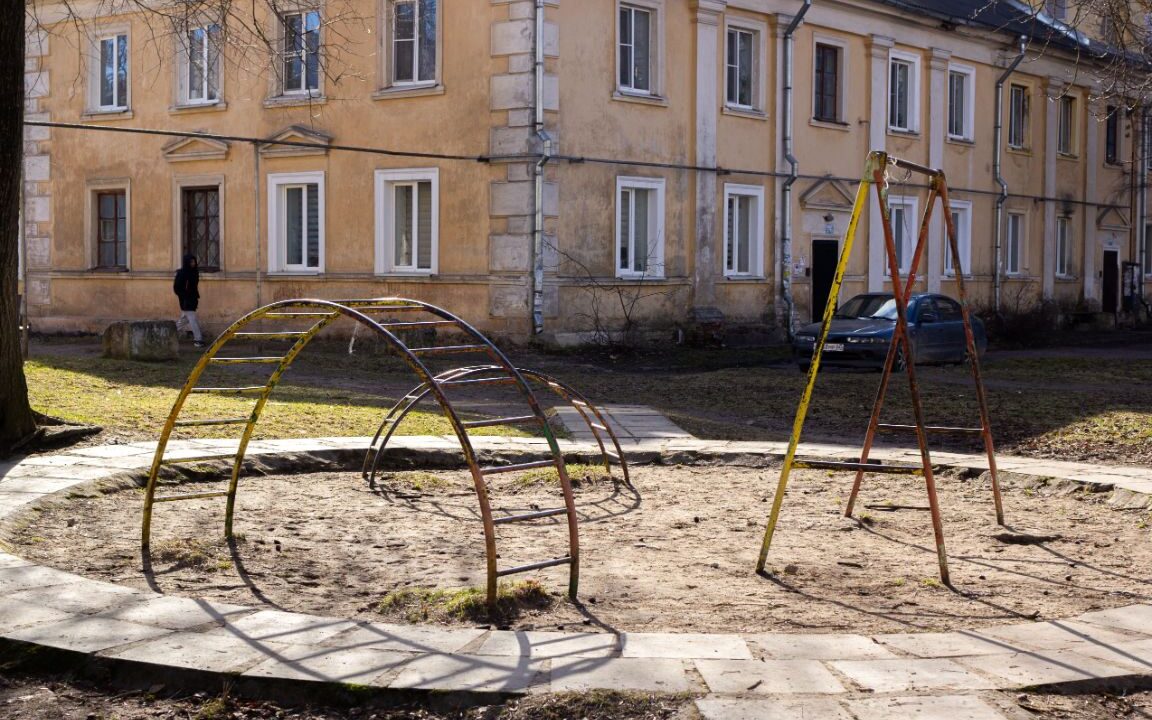
Before screens followed kids everywhere, recess had its own world.
There were no instructions to download. No levels to unlock. No one needed to bring much more than a ball, a jump rope, a piece of chalk, or enough imagination to turn a corner of the playground into something important.
The bell rang, the classroom doors opened, and everyone ran.
For a few minutes, the schoolyard belonged to the kids.
The Games Were Already Waiting
Some games were learned from older brothers and sisters.
Some came from cousins.
Some were passed down from one grade to the next, changing slightly every time someone explained the rules.
By the time you were old enough to play, the game already seemed like it had always existed.
Hopscotch squares were drawn on the pavement.
Jump ropes spun between two people.
Four-square courts were claimed quickly.
Kickball teams were chosen.
Tag started without much planning.
Someone shouted the rules, someone disagreed, and then everyone played anyway.
The games did not need to be perfect. They only needed enough kids, enough space, and enough time before the bell rang again.
Recess Was a Small Freedom
Recess felt different from every other part of the school day.
The classroom had desks, schedules, worksheets, and rules you could see.
The playground had its own rules, but they were usually made by the kids.
You decided who was on your team.
You decided if the ball was in or out.
You decided whether someone was safe.
You decided if a game had ended fairly or if there was still time for one more round.
Of course, that also meant arguments.
Someone always said the ball bounced twice.
Someone always claimed they had not been tagged.
Someone always wanted another turn.
But even the arguments became part of the memory.
They were the small, serious problems of childhood — important for five minutes, forgotten by the time everyone lined up to go back inside.
The Games Did Not Need Much
That was part of their charm.
Hopscotch needed chalk and a small stone.
Jump rope needed a rope and two people willing to turn it.
Four square needed a ball and a painted court.
Tag needed almost nothing at all.
Hide-and-seek only needed places to hide.
Kickball needed a ball, some open space, and a few kids who did not mind making up the teams as they went.
The playground gave children a way to make fun out of whatever was nearby.
A fence became a boundary.
A crack in the pavement became a rule.
The slide became home base.
The swings became a place to wait until your turn came back around.
The Rules Changed From School to School
Almost everyone remembers the same games differently.
Maybe your school called it four square. Maybe it had another name.
Maybe tag had a dozen versions.
Freeze tag.
TV tag.
Shadow tag.
Red Rover.
Red Light, Green Light.
Mother May I.
Duck Duck Goose.
The rules often changed depending on who was playing.
That was part of the tradition.
Kids did not need a written guide. Someone explained the game, someone corrected the explanation, and after a few minutes everyone understood enough to begin.
The game belonged to the group playing it.
Then vs. Now
| Then | Now |
|---|---|
| Kids learned games from friends, siblings, and older students | Many games are introduced through apps, videos, or organized activities |
| A ball, rope, chalk, or open space was often enough | Recreation often involves more equipment, screens, or planned programs |
| Recess games changed based on local rules | Many children share the same games through online trends |
| Arguments were settled on the playground | Rules are more often set by adults, coaches, or official programs |
| Boredom often led to new games | Boredom is often solved with a screen |
Not everything about the old playground was perfect.
Some kids were picked last.
Some games got too competitive.
Some arguments lasted longer than the game itself.
But the freedom of it still matters.
What the Playground Taught Without Saying So
The games taught small lessons without feeling like lessons.
You learned to wait your turn.
You learned to lose.
You learned when to speak up.
You learned who played fairly.
You learned that rules mattered, even when nobody agreed on them.
You learned how to join a game already in progress.
And sometimes you learned how to make your own fun when the game you wanted was already full.
Those lessons were not written on the board. They happened between the swings, the blacktop, the grass, and the line where the teacher stood waiting for recess to end.
The Bell Always Came Too Soon
No matter how long recess lasted, it never felt long enough.
Someone had just started winning.
Someone had just gotten a turn.
Someone had finally found the right hiding place.
Then the bell rang.
The ball was dropped.
The jump rope stopped.
The line formed slowly.
Kids came back inside out of breath, dusty, laughing, annoyed, or still talking about what had happened.
For a little while, the playground stayed with them in the classroom.
The game was over, but the story was not.
Why We Still Remember
Classic playground games stay with people because they were simple, shared, and repeated again and again.
They were part of ordinary school days.
They did not need to be recorded, saved, or posted anywhere.
They only needed to happen.
A group of kids.
A patch of pavement.
A ball.
A rope.
A little time before the bell.
And somehow, that was enough to make a memory last for decades.
Sources & Further Reading
- Heaps of Fun: Games, Rhymes, and Riddles in the Library’s Collections — Library of Congress background on the long history of familiar children’s games such as hopscotch and hide-and-seek.
- Before Video Games: Games Kids Played 300 Years Ago — National Park Service overview of how children’s games encouraged imagination, fairness, problem-solving, and turn-taking.
- List of 18th Century Toys and Games — National Park Service list including hopscotch, marbles, hide-and-seek, cards, playing catch, and other long-running children’s games.
Do You Remember This?
What games did you play at recess?
Maybe you remember hopscotch, jump rope, four square, kickball, tag, Red Rover, marbles, or the game your school seemed to play better than anyone else.
Do you remember this? Share your memory below.


Join the Conversation
What Do You Remember?
Did this story bring back a memory? Tell us below, or share a longer story on the Memory Wall.
Share a Full Memory